1971–1981
Teaching on three continents
I began teaching practical chemistry at the Université de Montréal. In Phnom Penh I taught analytical chemistry and spectrometric methods. During six years in Sfax I helped build the chemistry curriculum.
Organic chemistry · Toulouse
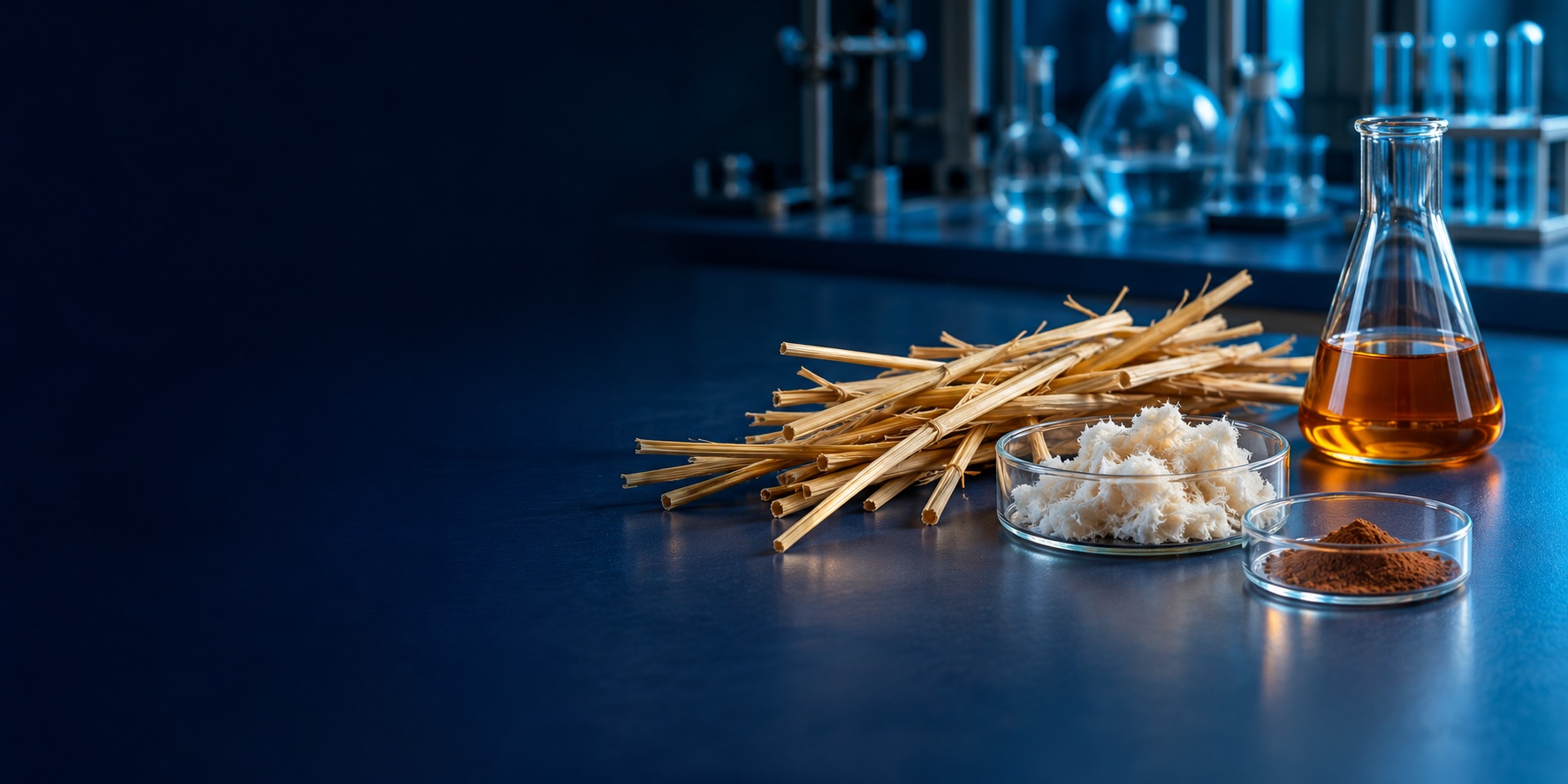
How can a wheat stalk become paper pulp, a resin or a fuel? This question connects my teaching in Toulouse with my research on plant refining.
Five periods trace my career. Teaching petroleum refining in Toulouse prompted a new question for my engineering students. How do you refine a plant when each of its components has its own chemistry?
1971–1981
I began teaching practical chemistry at the Université de Montréal. In Phnom Penh I taught analytical chemistry and spectrometric methods. During six years in Sfax I helped build the chemistry curriculum.
1981–1991
I joined the Institut national polytechnique de Toulouse as a maître-assistant in 1981 and became a university professor in 1983. I taught organic chemistry and petroleum refining while the laboratory investigated ways to transform molecules from plants.
1992–1998
I led the Fibres, Energy and Biomonomers research team. Straw and bagasse raised a question for applied chemistry. How could we isolate a papermaking fibre and recover the other components of the plant?
2000–2016
Pilot trials made it possible to study straw refining at a larger scale. From 2010 to 2014 the European BIOCORE programme investigated uses of cellulose, sugars and lignin in an integrated biorefinery.
Since 2018
At BioEB I continued studying how to fractionate non-food biomass using formic acid. In Toulouse I continued to lead my research team as an emeritus professor until the end of 2025.
Two wheat straw studies show how a chemistry question leads to a process trial and then to a choice of material.
Paper pulp · 2005
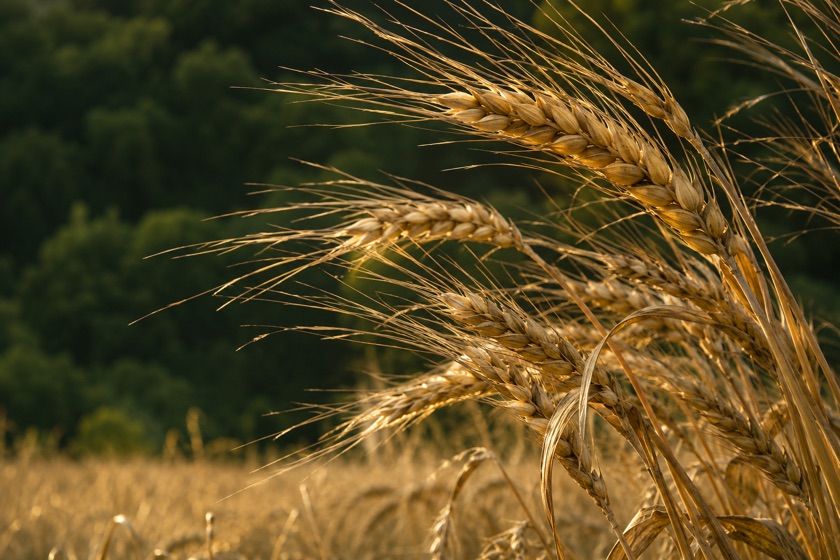
Cellulose forms the stalk’s framework. By studying how straw responds to pulping in an organic medium, our team investigated how to recover cellulosic pulp for papermaking.
View the reference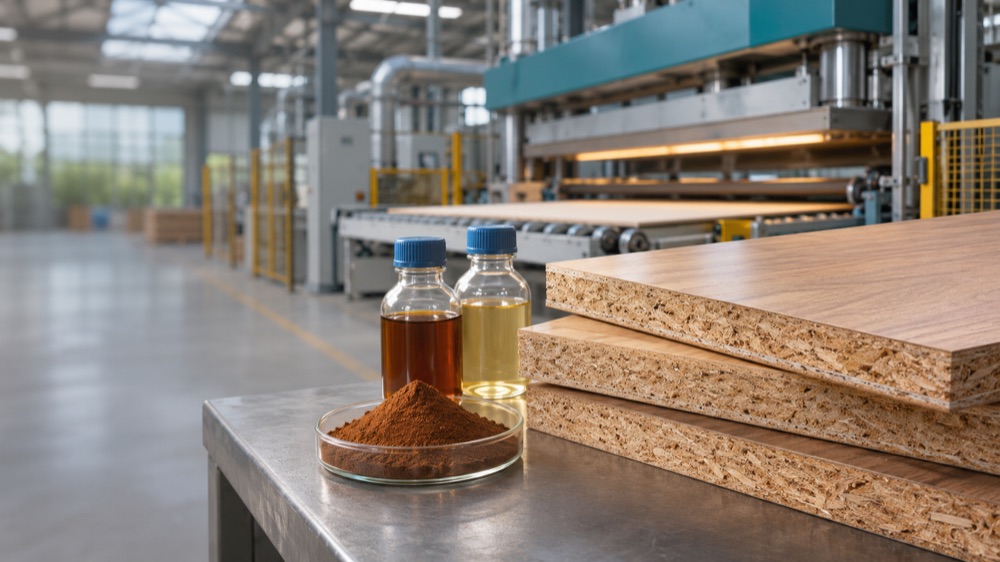
Phenolic resins · 2016
Lignin gives a stalk its stiffness. Its aromatic structure led our team to test its use in phenolic resins as a binder for wood panels.
View the referenceSynthesis and structural analysis of heterocyclic compounds. Projects included macrocyclisation and functionalisation of sugar derivatives such as isosorbide.
See a research recordReactivity at the interface between a solid base and a weakly hydrated liquid medium. Applications include the Wittig reaction and the use of furfural.
See a research recordFunctionalisation of lipids for fine chemicals. Some of this research combines fatty chains with furan compounds derived from biomass.
See a research recordExtraction and study of plant compounds, including the selection of dye plants and applications for natural colourants.
See a research recordStudies of ozone as an oxidant for pulp bleaching, lignin oxidation and water treatment.
See a research recordResearch on hemicelluloses and lignins as chemical feedstocks, with applications ranging from vanillin to phenolic resins.
See a research recordWheat straw contains cellulose fibres, hemicelluloses, lignin and minerals. Follow how formic acid refining below 100 °C separates them step by step.
Step 1
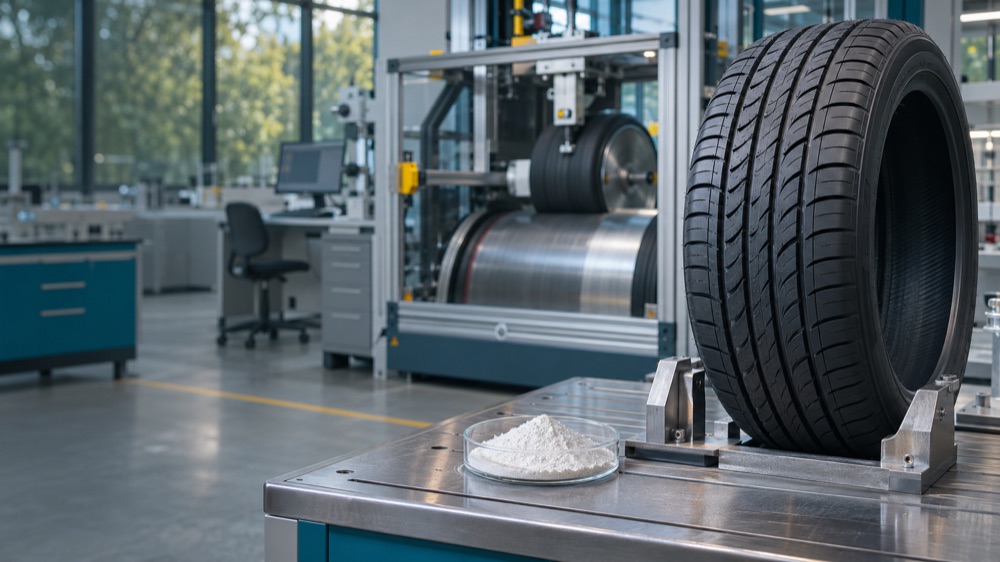
Silica naturally associated with cellulose initially follows the solid fraction. Desilication prepares the cellulose for pulp production or hydrolysis into glucose, followed by fermentation into second-generation bioethanol.
Step 2
Lignin is separated from the liquid phase by precipitation. Potential uses in selected phenolic resins draw on work characterising and formulating organosolv lignins.
Step 3
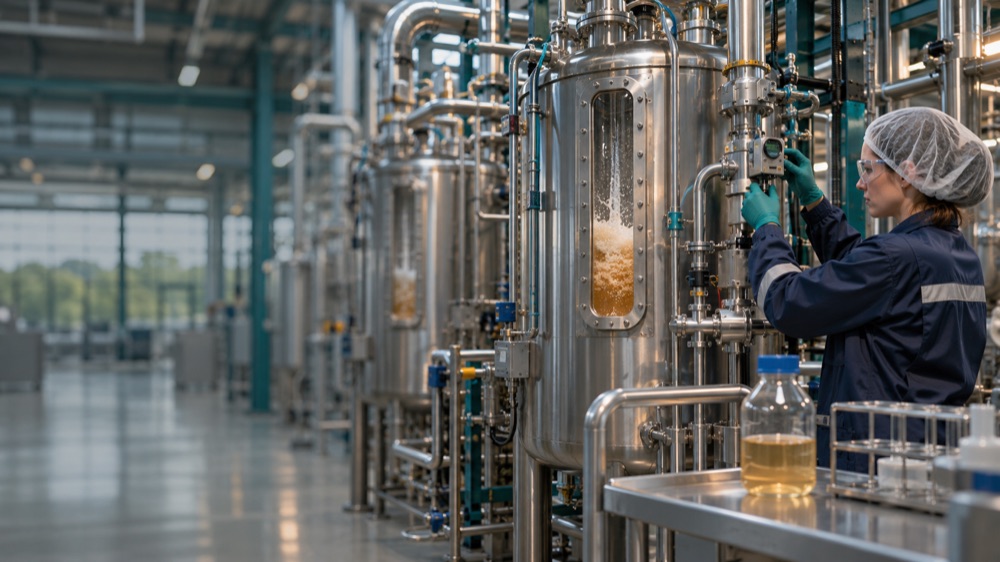
Hemicelluloses remain in the liquid phase with some minerals. Membrane separation allows the sugars to be recovered for use. Returning minerals to the soil is an avenue for study, depending on the composition of the fractions and agronomic needs.
A mass balance gives the mass of each fraction. Change the amount of straw to see how the quantities are recalculated.
| Fraction | Mass |
|---|---|
| Cellulose | 450 kg |
| Hemicelluloses | 250 kg |
| Lignin | 200 kg |
| Minerals | 80 kg |
| Balance difference | 20 kg |
Illustrative example based on Professor Michel Delmas’s mass balance. The slider scales the amounts proportionally. For 1,000 kg of straw, the reported fractions total 980 kg, leaving a balance difference of 20 kg.
The NCCSU approach links three steps. Plants take up CO₂ through photosynthesis, biomass stores the carbon, and refining allows it to be used in biobased materials and fuels.
Study intercropping inspired by milpa, such as cereals and switchgrass, to protect soils and supply lignocellulosic coproducts.
Assess whether the available heat source can deliver the temperature and heat output needed to fractionate biomass below 100 °C.
Explore the alcohol-to-jet route for converting second-generation ethanol from non-food biomass into sustainable aviation fuel.
From my two doctoral theses to research on hydrogen, this catalogue brings together the references from my research record. Look up a record by its number, a name or a few words from its title.